






AI adoption · for CIOs, CDOs and AI leads

AI is everywhere.
Value isn't.

Your organisation invested in AI: licences, platforms, pilots, training. People use it, and many say it makes them more productive. But that is not turning into better work or business results. Everyone will use AI. What matters is how.

One to two weeks, €2,500 fixed. Prefer to talk first? Book a free 20-minute conversation.

Before AIAI rolled out: everyone has itValue: only where work changes

The problem

Personal productivity gains are not becoming company results

Eight in ten people say AI has improved their own productivity. Only 37% see any effect on company profit. And the cracks are showing.

45%

AI tools nobody introduced. For almost half of German AI users, the tool they use most was not introduced by their employer.

Universität Konstanz, KI-Studie 2026
40%

More output, not better output. Four in ten desk workers received AI work last month that only looked finished. Fixing it took nearly two hours each time.

Harvard Business Review, Sep 2025, 1,004 US desk workers
45%

Changing the work feels risky. Almost half say it feels safer to stick to current goals than to redesign their work with AI.

Microsoft, 2026 Work Trend Index

80% and 37%: McKinsey, The state of AI in 2026, August 2026 (company profit measured as EBIT).

Our approach

Able to. Allowed to. Motivated to.

AI becomes easier to access every month. The challenge is no longer getting people started, but creating the conditions for them to use it well. Research suggests the conditions around people matter at least as much as individual skill. Good AI adoption needs all three.

Able to

Can I do this well?

The understanding, confidence and judgement to use AI in my own work: what to hand over, what to keep and what to check. What helps: short, playful challenges on people's own work, and AI do's and don'ts turned into small habits at the moment of use.

×
Allowed to

Does my organisation make it possible?

Suitable tools, usable data, clear rules, and managers who support trying. What helps: visual tools that help managers discuss opportunities and risks with their teams, and AI policies turned into one-page guides and decision trees.

×
Motivated to

Do I see a reason to work differently?

What AI means for my role, examples from colleagues, and the safety to try something new. What helps: one visual story that links your strategy and AI rules to each function, and examples from people in the same job, failures included.

Culture, manager support and development are more closely linked to reported AI benefits than individual skills and attitudes: 67% against 32%. Microsoft, 2026 Work Trend Index, 20,000 AI users in 10 countries.

How we work

Our AI adoption playbook, step by step

Start with what is in the way, not with another training. We work in rounds: each one starts from what people tell us, and ends with what changed.

01

Understand

AI-led interviews about people's actual work. Usage data shows whether people work with AI; the interviews show how, and why not.

02

Plan

We decide with you which barriers to tackle first, in which teams, and what success should look like.

03

Intervene

The right mix of what helps, in a monthly rhythm, in the channels you already have.

04

Measure and adapt

The same interviews after every round, next to your own data on quality, rework and turnaround time. Then the next round.

And again. After every round, the next teams start, and the plan follows what the measurement shows.

Proof

Why our interviews tell you more than a survey

Ask people an abstract question and you get the answer they think you want. Ask about their actual work and you find out what is going on. Our interviews are designed by behavioural scientists and run by AI, by voice or text, in fifteen to thirty minutes, in thirty languages.

What a survey asksWhat people answerWhat the interview reveals
"Do you use AI in your work?""Yes, for emails."She tried it on the forecast once. It invented a number. She went back to Excel and told nobody.
"Do you know what you may use?""More or less."Customer data goes into a personal account at home, because the approved tool cannot read PDFs.
"Does your manager support AI?""Sure."Her manager has never opened it. The one time she shared a prompt, the reply was: be careful with that.
94%

rated the AI interview as good as or better than a human interview. 59% rated it better.

4×

as much detail as a survey: 852 words per interview against 216 per survey response.

2 days

for 98 interviews. Thirty human interviews took two weeks.

Validation study with 235 adults in the UK and US, randomly assigned to an AI interview, a survey or a human interview. A randomised trial with the University of Zurich is under way. Data stays in the EU, transcripts are de-identified automatically, no individual answer reaches management, and the set-up is agreed with your works council.

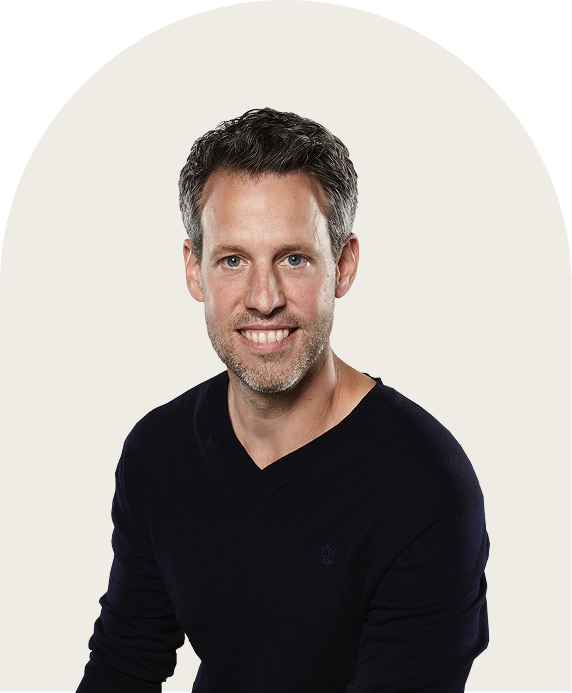
Arne KöttingMathijs Voordenberg

Who you work with

Arne Kötting and Mathijs Voordenberg

An organisational psychologist and a communication and creative strategist, together with our team of behavioural scientists and change and communication strategists in Düsseldorf and Amsterdam. More about us

Trusted by teams leading complex technology change

SiegwerkAbbottSysmexSyngentaDB SchenkerBauer Media Groupthyssenkrupp Materials ServicesBeeline Group

Your next step

Start with the AI readiness quick scan

In one to two weeks you know where you stand on your AI adoption journey and what it would take. You can stop there, with a clear view.

  1. A survey, before we meetYour AI lead, IT, HR, communication and two function heads answer questions on direction, rules, tools and data, culture and measurement.
  2. We read what existsThe AI vision, the policies, the training programme and the works council agreements.
  3. One half-day workshopWe play the answers back and test them against each other. Where people disagree is often the most useful finding.
  4. The scanAble to, allowed to and motivated to, scored against business, tech and people. One sentence per gap: what to do next, and who owns it.

What happens next

If you go on, we start with the interviews and shape the plan with your leaders. The cost of the scan is credited against the follow-up.

Your first step

AI readiness quick scan

One to two weeks€2,500 fixedNo obligation to continue
  • Where you stand, in one overview
  • A short analysis per gap, and who owns it
  • The blockers and drivers we can already see
  • A proposal for the next step

Prefer to talk first? Book a free 20-minute conversation about one challenge you are facing. No preparation needed.